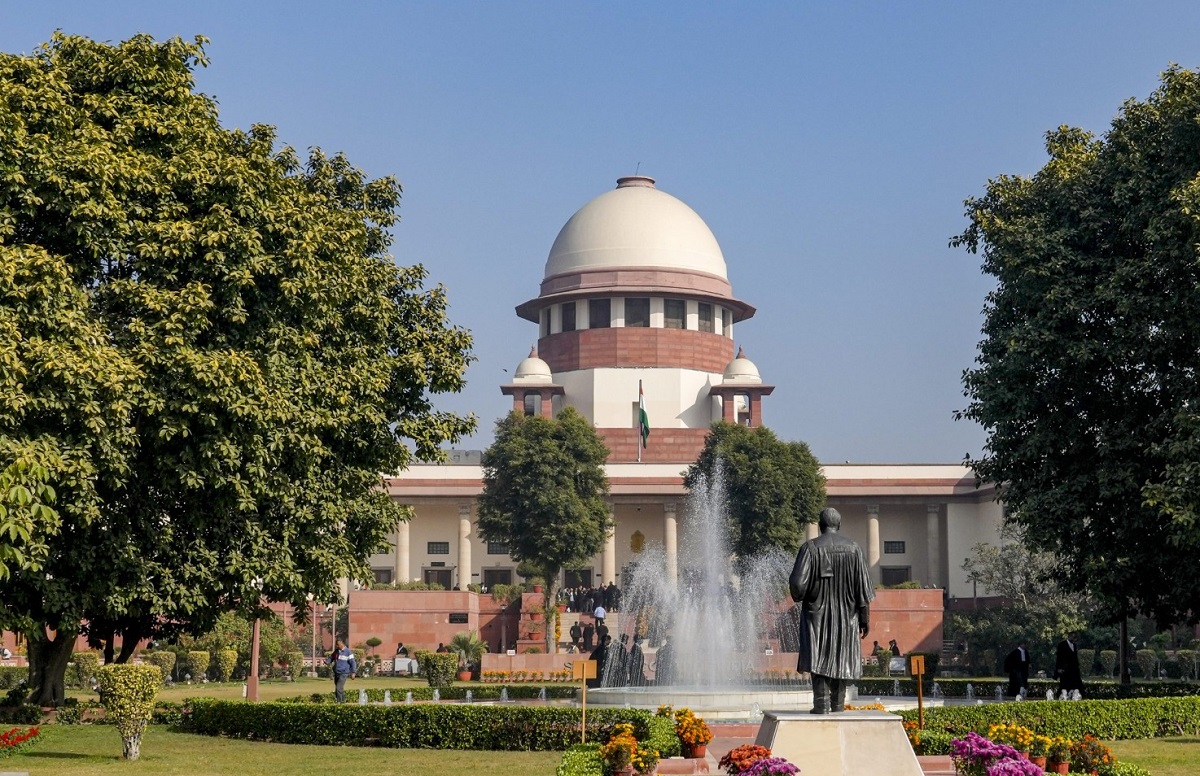
The Supreme Court has asked the governments of Manipur and Assam and other concerned authorities to consider setting up two exclusive special courts to conduct trials in cases investigated by the Central Bureau of Investigation (CBI) and the National Investigation Agency (NIA) in connection with the 2023 ethnic violence in Manipur. A bench comprising Chief Justice Surya Kant and Justices Joymalya Bagchi and V Mohana passed the direction while reviewing the progress of investigations and legal proceedings in cases arising from the violence. The court suggested that one special court should exclusively deal with cases investigated by the CBI, while another should handle cases investigated by the NIA. The proposed arrangement is aimed at ensuring that the trials in these cases can proceed without being delayed by other matters before the courts.
“The authorities shall consider setting up two separate exclusive courts, one for dealing with the CBI cases and another for dealing with the NIA cases arising out of the Manipur violence,” the bench ordered. The Supreme Court also sought clarity on the existing arrangements. It noted that special judges are already hearing CBI and NIA cases but asked whether those judges were dealing exclusively with cases related to the Manipur violence or were also handling other cases. The bench directed the authorities to compile comprehensive details of cases in which chargesheets have already been filed. The information is to include case numbers and the present status of proceedings. The court said the records should be made accessible to victims, their families and their legal representatives. The registrar general of the concerned high court has also been asked to submit a status report on the proposed court arrangement before the next hearing.
During the hearing, Additional Solicitor General Aishwarya Bhati informed the bench about the progress of the CBI investigations. According to the information placed before the court, the CBI has investigated 31 cases connected with the violence.Final reports have been filed in 27 of these cases. These include 22 chargesheets and five closure reports. Four cases are still under investigation.Of the 22 cases in which the CBI has filed chargesheets, courts have taken cognisance in 20 cases, while cognisance is pending in two others. One of the cases is triable by a magistrate, while the remaining cases will involve trials before Sessions courts.All the CBI cases have been transferred to Gauhati, Bhati told the court.The NIA has also made progress in its investigations. The agency was entrusted with 30 cases related to the violence and has filed chargesheets in 15 of them. Investigations are continuing in the remaining 15 cases.Bhati informed the court that the 15 cases in which chargesheets have been filed are ready for trial, although further investigation is continuing in some of the matters. Charges have already been framed in seven of these cases.Of the 15 NIA cases in which chargesheets have been filed, two are pending before a court in Delhi, five are before courts in Gauhati and eight are pending before courts in Manipur.
The issue of access to case records was also raised during the hearing. Senior advocate Vrinda Grover expressed concern that victims and their families were still not receiving access to status reports and chargesheets despite earlier directions of the Supreme Court. The bench directed that details of the cases and relevant reports be compiled and placed before it. It also stressed that the legal counsel representing the victims and the families concerned should have access to the proceedings and relevant records.The Supreme Court further directed the authorities to ensure that investigations by the CBI and NIA continue without interruption. It called for proper coordination among the Manipur government, central investigating agencies and security forces to facilitate the investigations and related proceedings.The bench also took note of the security situation in the state. It observed that joint operations involving Manipur Police and security forces had strengthened efforts to recover arms and ammunition and make arrests.The court stressed that adequate security arrangements should continue, including measures to ensure the safety of students.The ethnic violence in Manipur began on May 3, 2023, following a Tribal Solidarity March held in the hill districts in opposition to a demand for Scheduled Tribe status for the majority Meitei community.The prolonged conflict has resulted in more than 200 deaths, hundreds of injuries and the displacement of thousands of people. The violence has also led to a large number of criminal cases and investigations involving multiple agencies. With the Supreme Court now seeking a more focused judicial arrangement for the CBI and NIA cases, the proposed exclusive courts could provide a dedicated forum for the cases arising from the violence and help the legal proceedings move forward in a more organised manner.