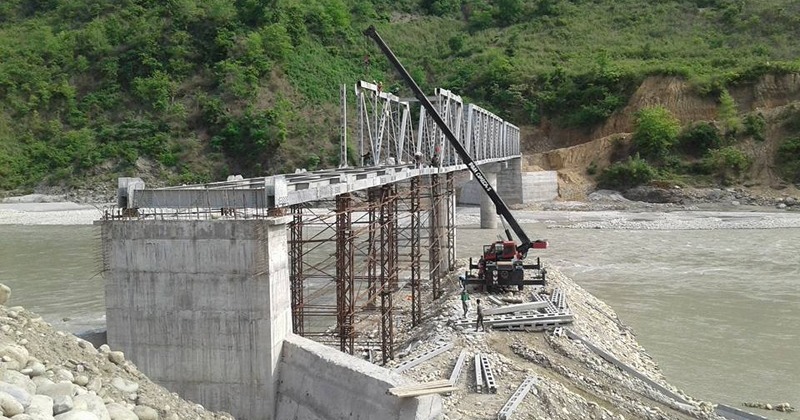
The Bheri Corridor, a strategic artery intended to link India, Nepal, and China, is facing a significant bottleneck. While over 50 kilometers of the Jajarkot–Dolpa section approach final blacktopping, a critical failure in infrastructure remains: five major bridges have been left incomplete for over six years. Despite the road being opened by the Nepali Army in 2019, these missing “lifelines” are preventing the corridor from becoming the year-round transport hub the Karnali Province desperately needs.
The 118-kilometer stretch from Jajarkot to Dunai in Dolpa has seen mixed fortunes. While 56 kilometers of track are nearing completion, the transition from earthen roads to a reliable highway is being thwarted by stalled bridge construction. According to Project Chief Naresh Kesari, contracts for several bridges, including the vital crossing at Nalgaad River, were awarded as far back as 2021, yet progress remains minimal. While work has finally commenced at locations like Tallu and Chhalgaad, other sites such as Khadang are mired in disputes and implementation delays that have drawn sharp criticism from local stakeholders.
The delay is not just a local inconvenience but a strategic setback. The Bheri Corridor spans 310 kilometers from Surkhet to the Nepal-China border at Marim. Currently, vehicles can reach Dunai, but the lack of permanent bridges makes the journey precarious, especially during the monsoon season. Authorities are now in the difficult position of having to reassign construction responsibilities for three stalled projects, while still negotiating terms for two others. Officials warn that the slow pace in these lower sections is creating a domino effect, making it logistically impossible to advance construction in the more remote Upper Dolpa regions.
For the residents of Karnali, the corridor represents a gateway to economic revival through tourism and trade. However, the persistent “limbo” of these bridge projects highlights a recurring theme of infrastructure mismanagement. While the Nepali Army continues to accelerate road-cutting works in the north, the middle of the corridor remains a patchwork of completed asphalt and impassable river crossings. Locals and officials alike are now calling for urgent government intervention to ensure that these five bridges do not see a seventh year of neglect, finally allowing the Bheri Corridor to fulfill its potential as a regional powerhouse.
With the National Planning Commission having already approved 14 bridges for the remaining sections, the pressure is on the Road Division Office to clear the contractual hurdles. Until then, the Bheri Corridor remains a road to the future that travelers simply cannot cross.