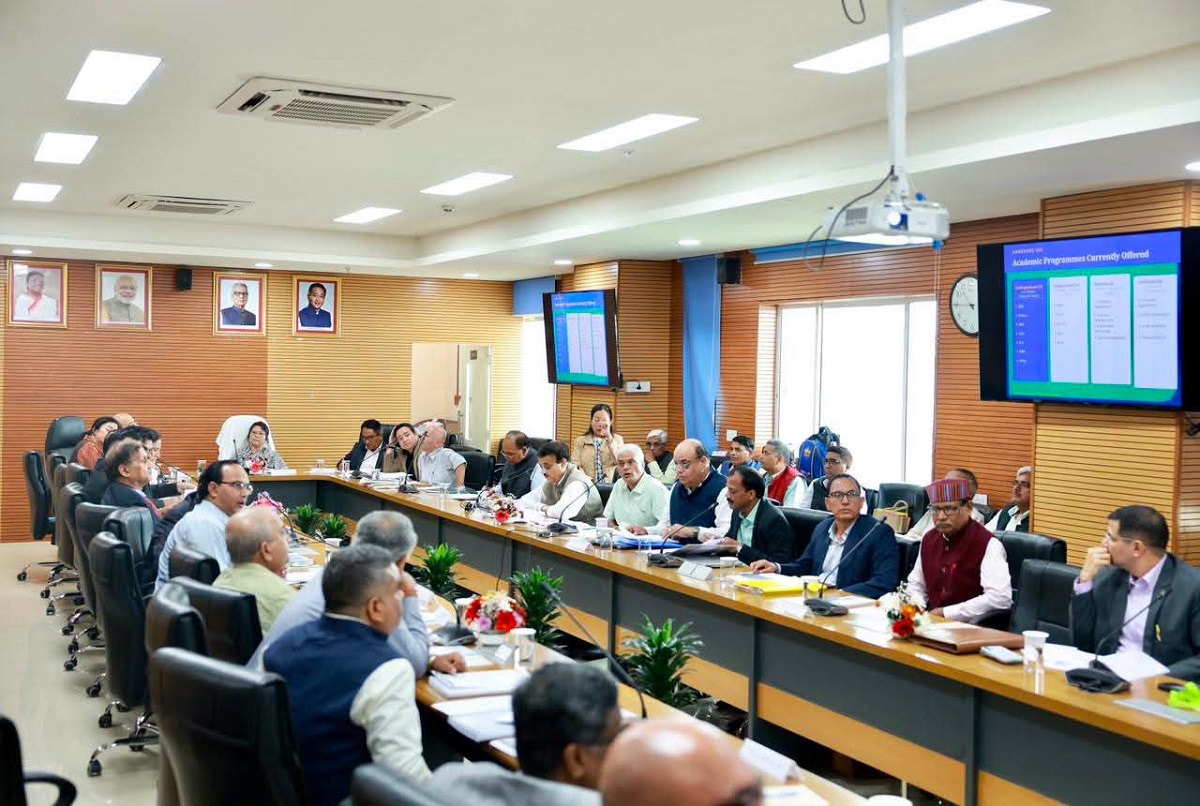
The Sikkim Private Universities Regulatory Commission (SPURC), in coordination with the Higher Education Department, Government of Sikkim, convened an interaction with Vice Chancellors and Registrars of private universities of Sikkim and officials of the Higher Education Department at the conference hall of Tashiling Secretariat on Tuesday.
The meeting was chaired by Chairperson, Sikkim Private Universities Regulatory Commission, Ganga D.
Pradhan, in the presence of Members, SPURC,
Palden Dorjee Lama and
Zigmee Bhutia, Principal Secretary, Education Department,
Sandeep Tambe, with a focus on strengthening the State’s higher education ecosystem, institutional credibility, academic standards and responsible governance.
Ganga D Pradhan reiterated the vision of building a credible, transparent and trustworthy higher education ecosystem in Sikkim. She called upon private universities to work in close coordination with the Government and ensure strict compliance with the Sikkim Private Universities (Establishment and Regulation) Act, 2025, while upholding professional ethics, academic integrity and quality standards.
She further emphasised that the credibility of institutions must be protected through transparent academic practices, proper documentation and adherence to all statutory and regulatory requirements.
Tambe highlighted the State government’s vision of positioning Sikkim as a vibrant and globally recognised education hub and emphasised the collective role of the Government and educational institutions in contributing to the State’s academic, social and economic development. He encouraged universities to focus on tangible academic growth, quality infrastructure, student welfare, research, employability and responsible institutional functioning.
The interaction also stressed the need for universities to maintain high standards of academic integrity and ensure that degrees, diplomas, certificates and other academic credentials are issued strictly in accordance with applicable rules and prescribed academic requirements.
The participants underscored the importance of preventing fraudulent or fake educational certificates and ensuring proper verification of academic credentials, so that the credibility of legitimate institutions and the future of students are protected. It was emphasised that no compromise should be made with the authenticity, quality and recognition of academic qualifications.
Vice Chancellor, Sikkim Manipal University, Dr Gopalakrishna Prabhu, highlighted the importance of developing permanent campuses and strengthening institutional infrastructure, while acknowledging the challenges relating to land availability and construction in the State. He also emphasised regulatory compliance and safeguarding students’ interests.
Vice Chancellor, SRM University Sikkim, Cdr. (Dr.) Gurdaman L. Sharma, highlighted the potential for Sikkim to emerge as an education hub by attracting students from across the country. He stressed the need for innovative, industry-oriented and student-centric programmes aligned with emerging industry requirements, with a focus on providing students with quality education, relevant skills and meaningful career opportunities.
Registrar, ICFAI University, Sikkim, Dr Rohit Rathi, shared the university’s experience in meeting statutory and regulatory requirements and highlighted the importance of inter-institutional knowledge sharing and collaboration. He also stressed the need for innovative approaches to address admission challenges.
The interaction provided an opportunity for representatives of various private universities to showcase their academic programmes, faculty strength, infrastructure and facilities, research initiatives, outreach activities and other institutional developments.
The presentations highlighted the efforts being undertaken by the institutions to strengthen academic delivery, expand opportunities for students and contribute to the State’s emerging education ecosystem.
The deliberations also touched upon the need for continuous improvement in the higher education sector, including strengthening faculty quality, research and innovation, industry linkages, infrastructure, student support systems, employability and institutional accountability.
The participants emphasised that the growth of Sikkim as an education destination must be accompanied by strong regulatory oversight, transparent governance and consistent academic standards.
The interaction further highlighted the importance of protecting students from misleading academic practices and ensuring that institutions provide clear and accurate information regarding courses, recognition, fees, academic requirements and career opportunities. Strengthening grievance redressal mechanisms and ensuring greater accountability were also identified as important aspects of building student confidence in the higher education system.
The deliberations reflected the diverse initiatives and progress being made by private universities in Sikkim, while also identifying areas for further collaboration and institutional strengthening.
The participants emphasised the importance of quality education, responsible governance, academic integrity, adequate infrastructure, authentic academic credentials and student-centric practices in building a credible and sustainable higher education ecosystem.
The interaction concluded with a shared commitment towards strengthening institutional standards, ensuring regulatory compliance and fostering greater collaboration between the Government and private universities, with the objective of further establishing Sikkim as a quality, credible and globally competitive education.