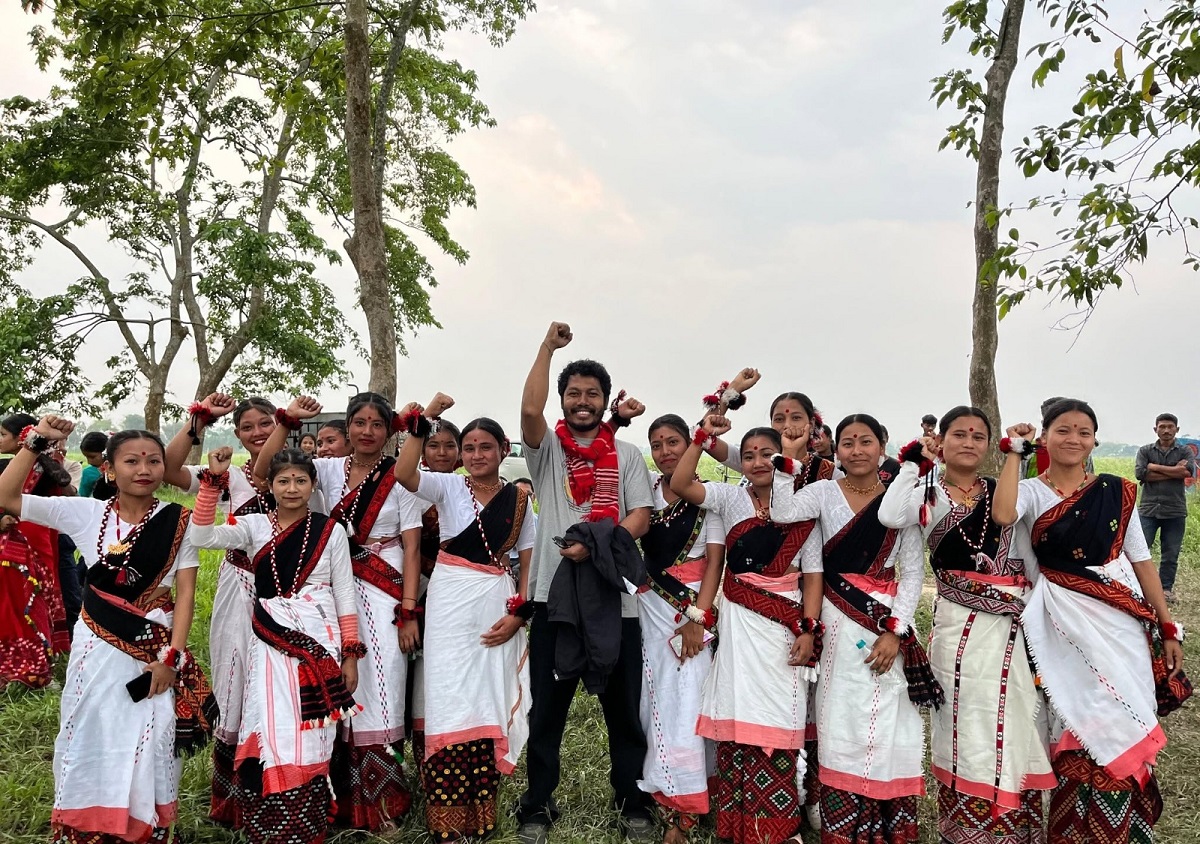
The Assam government has invoked the National Security Act (NSA) against indigenous rights activist Pranab Doley, preventing his release just a day after a sessions court granted him bail.
Golaghat Deputy Commissioner Biswajit Phukan confirmed that the decision was taken based on a police report. With the NSA now in force, Doley will remain in custody despite the court’s bail order.
According to an official communication issued by the state government, Doley is facing 13 criminal cases. Authorities have accused him of inciting hatred against the state, provoking communal unrest, obstructing government officials from carrying out their duties, and other related offences.
The government has also alleged that Doley was involved in “suspicious foreign transactions from doubtful sources” in violation of the Foreign Contribution Regulation Act (FCRA).
Doley was arrested on July 12 along with another activist after participating in protests against a proposed hotel project at Ingle Pathar, a village near Kaziranga National Park.
Police alleged that during the protest, Doley unlawfully entered the Tea Tribes Museum site and later trespassed into the nearby Assam Tourism Development Corporation (ATDC) Hyatt project while carrying deadly weapons.
However, Additional Sessions Judge N.M. Abdullah Ahmed granted him bail on July 29 on a bond of Rs 20,000. The court observed that investigators had already recorded statements of key witnesses and found no likelihood of the accused tampering with evidence.
In the bail order, the judge remarked that the dispute appeared to stem from “deep-rooted anxiety regarding environmental degradation” and its impact on the socio-cultural identity of the local tea tribe communities.
The court further observed that when environmental conservation and indigenous rights intersect, criminal law should not be used to suppress public concerns. Instead, it stressed that lasting public order can only be achieved through dialogue and by addressing the grievances of affected communities.
The judge also expressed hope that the dispute would be resolved through peaceful discussions involving all stakeholders rather than confrontation.