
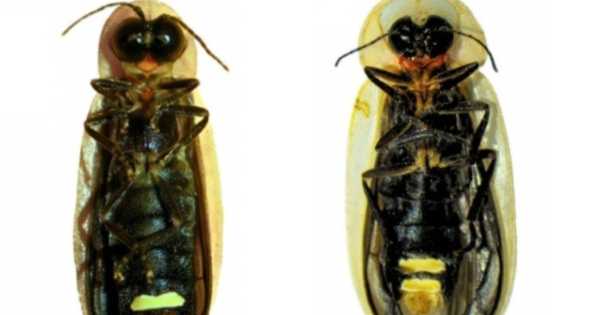
Scientists have discovered two previously unknown species of fireflies in Meghalaya’s East Khasi Hills, marking the first formal documentation of such insects from the state and ending a century-long gap in the study of the genus Diaphanes in India.
A joint research team from Assam Don Bosco University, University of Ruhuna, and Debraj Roy College located the glowing insects in remote, undisturbed forests using hand nets and visual night surveys.
The newly identified species are named Diaphanes meghalayanus and Diaphanes mawlynnong, bringing the total number of known Indian species in this genus to 15.
Diaphanes meghalayanus is notable for its black-and-vivid-red pattern on the shield-like plate behind its head, along with brownish-yellow wing covers and a slender reproductive system. The name reflects its origin in Meghalaya.
Diaphanes mawlynnong, named after Mawlynnong—often called the cleanest village in Asia—features rare bead-like antennae, a bright red central plate, and pale brown wings. The naming also honors the Khasi community’s role in preserving the region.
Researchers spotted these bioluminescent insects during February nights by scanning forests for faint green pulsating flashes. Males were seen flying 10–15 meters above ground, while a rare wingless female of D. mawlynnong was found beneath a boulder, emitting slower light pulses.
The species thrive in dark, humid environments such as semi-evergreen forests, bamboo patches, and areas near rocky streams, with temperatures around 18–20°C and humidity levels between 77–80%.
This discovery is significant for biodiversity research in the Indo-Burma hotspot and highlights the importance of preserving dark, undisturbed habitats. The absence of artificial light plays a crucial role in the survival of these fireflies.