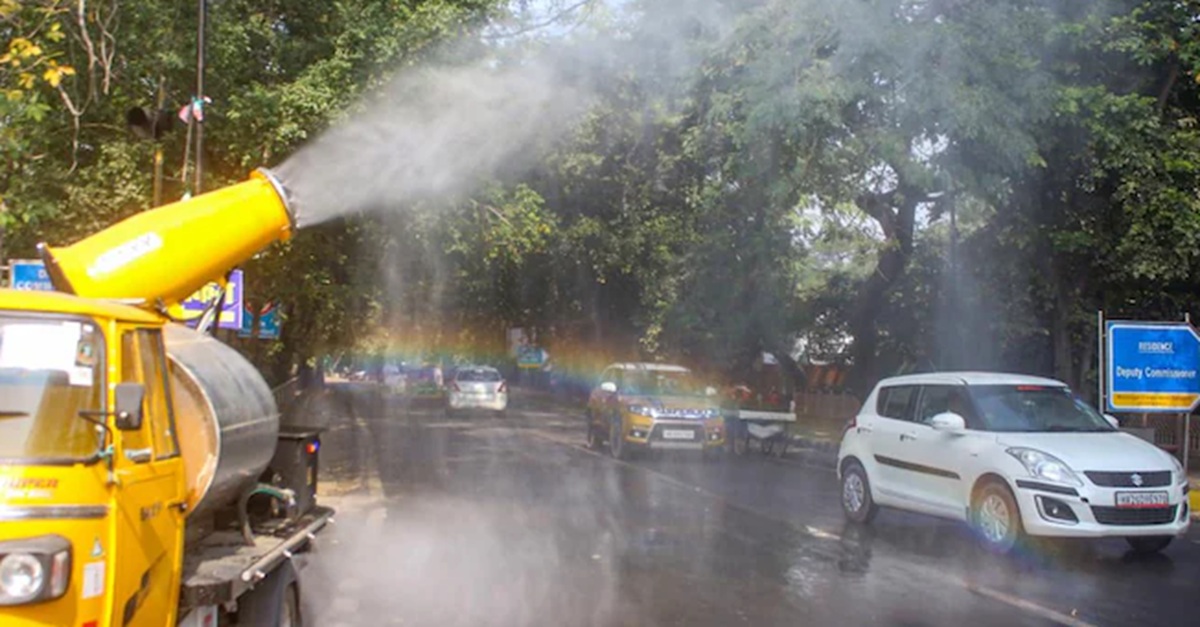
On Monday morning following Diwali celebrations, Delhi residents woke up to hazardous air quality as the overall Air Quality Index (AQI) surged past 350, with several key areas breaching the severe 400 mark, prompting the Delhi government to deploy anti-smog guns across the capital to spray fine water droplets into the air to reduce pollution. These anti-smog guns, also referred to as spray guns, mist guns, or water cannons, function by connecting a high-pressure propeller system to a vehicle-mounted water tank that converts water into ultra-fine droplets measuring 50 to 100 microns and spraying them up to 150 feet high at a rate of 30 to 100 liters per minute, creating a rain-like canopy effect that binds suspended particulate matter like PM2.5 and PM10 to draw them down to the ground. Beyond urban air pollution management, these devices are routinely utilized to control industrial dust in mining, grinding, coal, and stone-crushing operations, and were notably deployed following the demolition of the Noida twin towers. However, environmentalists point out that anti-smog guns offer only localized, short-term relief during active operation rather than providing a permanent or long-lasting solution. The deployment comes after Delhi recorded a 24-hour average AQI of 376 on Sunday, November 8, 2026, placing it in the ‘very poor’ category with 22 of 59 monitoring stations reporting ‘very poor’ air and 12 registering ‘severe’ levels—led by Jahangirpuri’s peak reading of 463—before widespread night-time firecracker usage caused localized pollution spikes that pushed multiple monitoring stations well beyond the 400 threshold.
Delhi Deploys Anti-Smog Guns After Post-Diwali Air Quality Plunges to Severe Levels