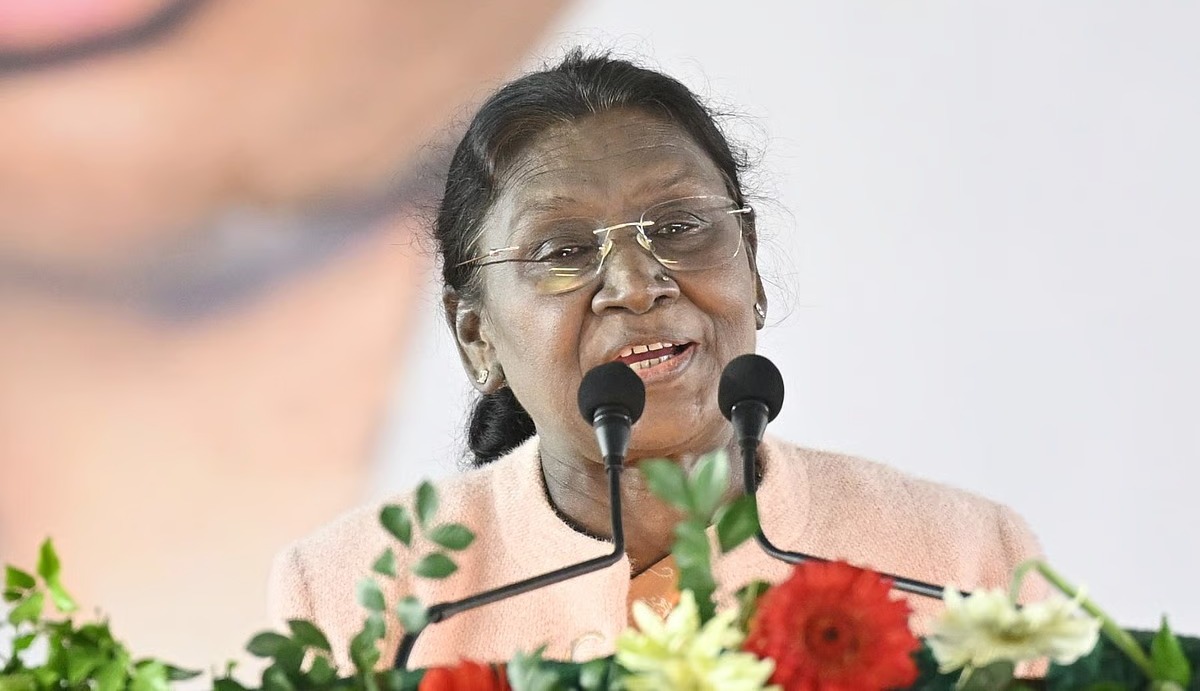
At the 22nd Parsi Maha’s closing ceremony and the Ol Chiki script’s 100th anniversary celebration in Jamshedpur, Jharkhand, President Droupadi Murmu spoke about the importance of the Ol Chiki script to the Santhali community’s identity in terms of culture, language, and education. Speaking at the event, the President stated that Pandit Raghunath Murmu’s Ol Chiki script has evolved into a suitable representation of the Santhali identity. She added that the creation of the new script was the historical result of initiatives that supported the Santhali language, which is the foundation of the people’s rich cultural legacy. The significance of language in the general advancement of society was brought up by President Murmu.
She claims that pupils must be encouraged to learn different languages in order to advance the Santhali language and enhance the depth of its literature. According to her, pupils should be exposed to a variety of languages because this encourages them to develop broader perspectives in order to address global issues. The President also emphasized the importance of making Santhali literature accessible to pupils from different language groups. Translation would be required for this. Translation is seen as a way for others to access the Santhali group’s intellectual wealth.
The President said that promoting Santhali literature would enrich India’s linguistic diversity and highlighted Pandit Raghunath Murmu as a visionary whose creation of the Ol Chiki script empowered the Santhal community to preserve their history, culture, and values. She noted that the centenary celebration of Ol Chiki was an opportunity to honour this legacy and renew efforts to protect indigenous languages. The President also praised cultural platforms like Parsi Maha for strengthening unity and passing culture to future generations. The event, attended by community leaders, scholars, cultural activists, and students, underscored the script’s lasting relevance and concluded with a renewed focus on preserving language heritage and encouraging openness and cultural exchange among India’s diverse language groups.