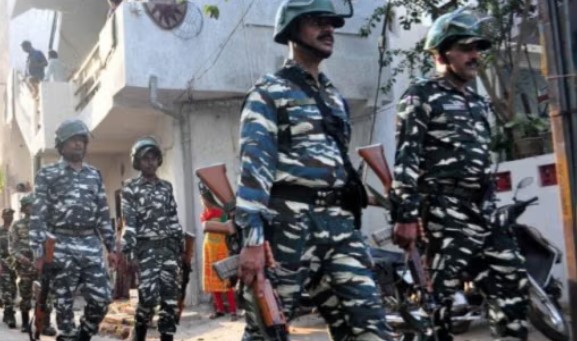
The Union Government is set to introduce the Central Armed Police Forces (General Administration) Bill, 2026, in the Rajya Sabha on Monday, March 23, a move that critics argue formalizes a “brass ceiling” for cadre officers. The proposed legislation seeks to create a unified statutory framework for the BSF, CRPF, CISF, ITBP, and SSB, but its most controversial provisions mandate a fixed and significant quota for Indian Police Service (IPS) officers in top-tier roles. According to the draft, 50% of Inspector General (IG) posts and at least 67% of Additional Director General (ADG) positions will be legally reserved for IPS officers on deputation. Most significantly, the bill reserves 100% of the highest ranks—Special Director General and Director General—exclusively for the IPS, effectively ensuring that no cadre-grown officer can ever lead the force they joined as a sub-inspector or assistant commandant.
This legislative push appears to directly bypass a landmark May 2025 Supreme Court ruling, which had instructed the Ministry of Home Affairs to “progressively reduce” IPS deputation up to the IG rank to address chronic career stagnation among the 13,000 Group-A cadre officers. In a bold legal maneuver, the bill includes an “overriding clause” stating its rules apply notwithstanding any prior court judgments. While Home Minister Amit Shah and government sources defend the move as essential for “seamless Centre-State coordination” and national security synergy, CAPF veterans have reacted with outrage. At a press conference on Friday, retired top officials from various paramilitary forces accused the government of yielding to “IPS pressure groups” and warned that imposing “parachuted leadership” over specialized tactical cadres would severely damage the morale and operational effectiveness of over a million personnel stationed at India’s most volatile borders.