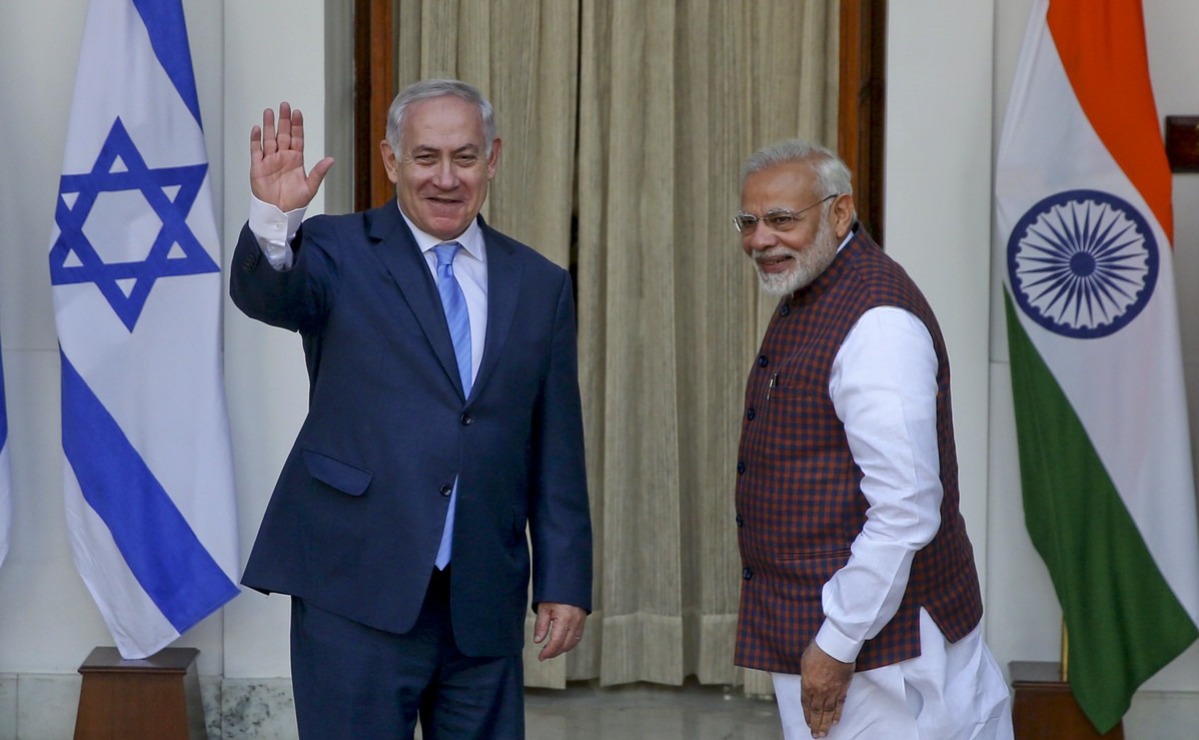
India is seeking to strengthen and broaden strategic ties and defense collaboration, including the cooperative development of laser weapons, long-range stand-off missiles, drones, and anti-ballistic missile defense, on the eve of Prime Minister Narendra Modi’s two-day visit to Israel. From February 25 to 26, PM Modi will travel to Israel. Although a memorandum of understanding on security cooperation is anticipated to be signed by both nations, no defense agreement will be signed because bilateral defense cooperation is a continuous process between two close allies and is valued at approximately USD 10 billion over the next years.
Israel is believed to have agreed to transfer the newest defense technologies with India, including the much sought-after high-tech laser defense and other stand-off systems, despite the fact that both sides are keeping quiet about PM Modi’s visit. In contrast to previous years, Israel is expected to divulge all defense technologies. An agreement on enhanced defense cooperation was inked during Defense Secretary RK Singh’s visit to Israel in November of last year, laying the groundwork for this new partnership.
India is exploring joint development of an advanced anti-ballistic missile defence system with Israel under Mission Sudershan, announced by Narendra Modi to shield the hinterland from long-range enemy missiles. Israel, a global leader in missile defence with systems like Arrow missile system, David’s Sling and Iron Dome, is seen as a key partner. India is also looking to acquire long-range missiles and loitering munitions, including SPICE 1000, Rampage, Air LORA and Ice Breaker. The Indian Navy plans to procure extended-range Barak 8 systems to strengthen warship protection. With close ties between Modi and Benjamin Netanyahu, both nations are deepening cooperation not only in defence but also in science and technology, agriculture, clean water and quantum computing.