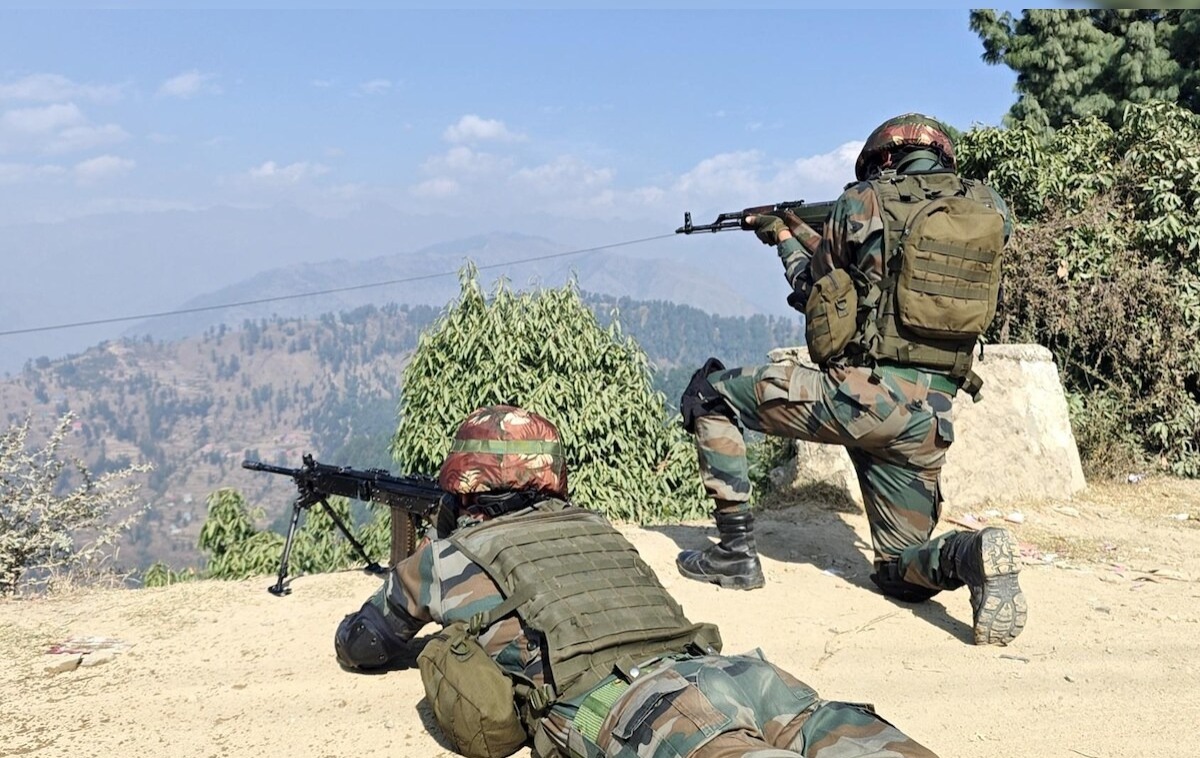
Ten significant accomplishments in 2025 were emphasized by the Indian Army, demonstrating a clear move toward future-ready warfare with a focus on accuracy, technology adoption, cooperation, and indigenization. Operation Sindoor, which was initiated in May 2025 in response to the terror attack in Pahalgam by terrorists supported by the Pakistan Army, was the most important development. The Chief of Defense Staff, all three Service Chiefs, and the Army’s Military Operations Branch oversaw the operation from the DGMO Ops Room. Nine terror camps across the border were destroyed during the operation; two were destroyed by the Indian Air Force and seven by the Indian Army.
The strikes were described as time-bound, precise, and calibrated, strengthening deterrence while preserving escalation control. The Army described how, between May 7 and May 10, when drones were employed to attack military and civilian assets, it successfully thwarted Pakistan’s attempts at retaliation. All threats were neutralized by integrated air defense and counter-UAS systems, avoiding damage and casualties. Ground-based weapons were used to demolish over a dozen terror launch platforms along the Line of Control, obstructing infiltration routes. An agreement to stop gunfire and military action was achieved when Pakistan’s DGMO asked for a ceasefire on May 10.
The Army emphasized advancements in long-range weapons with the BrahMos and Pinaka systems. Over the year, the Army significantly enhanced its combat, strike, and technological capabilities. Key milestones included a successful BrahMos combat missile launch and advances in extended-range variants, along with the induction of two additional Pinaka regiments and the successful test of the 120 km-range Pinaka Long Range Guided Rocket. In aviation, six AH-64E Apache attack helicopters were inducted, strengthening anti-armour strike capability. New battlefield organizations were introduced, including Bhairav light commando battalions and Ashni drone platoons, alongside Shaktibaan Regiments and Divyastra Batteries equipped with unmanned systems and loitering munitions.
Indigenization progressed strongly, with 91% of ammunition now domestically produced and the induction of nearly 3,000 drones of various types. Digital transformation advanced through new apps and edge data centres. Strategically, senior leadership emphasized grey-zone warfare, jointness, and innovation, while military diplomacy expanded through major joint exercises with key partner nations. Innovation efforts under Inno-Yoddha 2025–26 further reinforced the Army’s push for self-reliance and future readiness.