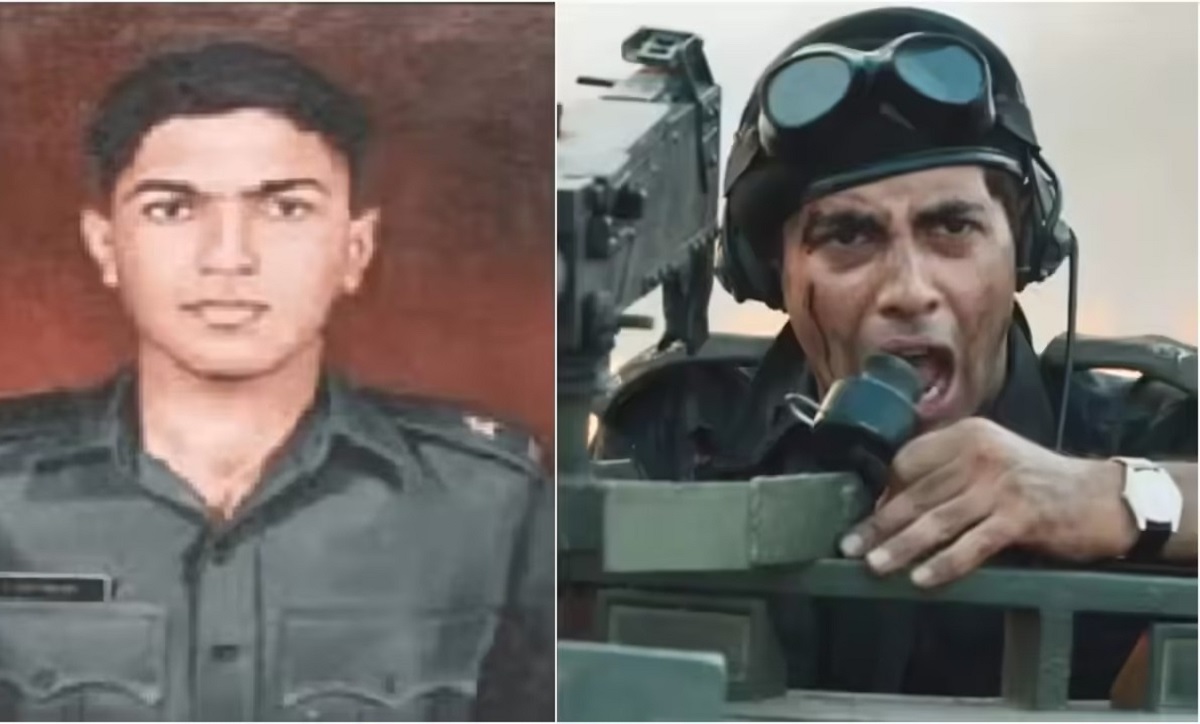
Agastya Nanda’s film Ikkis, which premiered in theatres on New Year’s Day, narrates the story of Second Lieutenant Arun Khetarpal, a martyr of the 1971 India-Pakistan war. The title, Ikkis, meaning “Twenty one,” reflects Arun’s age at his death. The film features the late Dharmendra, who portrays Arun’s father, Brigadier ML Khetarpal, in his final on-screen role. Over the past 55 years, Arun’s family has consistently shared accounts of his bravery, ensuring his heroic legacy endures in the public consciousness.
Arun Khetarpal, who completed his training at the Indian Military Academy in 1971, was commissioned into the 17 Poona Horse shortly thereafter. His Young Officers Course in Ahmednagar was interrupted by the outbreak of war between India and Pakistan in December 1971. Due to the war, Arun was required to expedite the completion of his months-long training course within a few days.
Arun displayed an unwavering commitment to his country, offering his services with great passion. In an interview with News 9 Live, his brother Mukesh Khetarpal recounted the circumstances of Arun’s death, detailing an intense confrontation where 9 Indian tanks were encircled by 25 Pakistani tanks. Arun’s tank was credited with destroying 8 to 9 enemy tanks during the battle. As the conflict progressed, Arun’s tank was ultimately set ablaze due to a mechanical failure of another officer’s gun. Despite being urged to evacuate his tank, Arun resolutely refused to abandon his position.
Arun, during a critical moment, insisted his weapon was operational even after receiving orders to cease fire, as recounted by Mukesh. This act of defiance led him to keep firing until he was ultimately killed by an enemy tank on December 16, 1971, shortly after completing his military training.
On December 17, 1971, a ceasefire was declared by Prime Minister Indira Gandhi, one day after the death of Arun Khetarpal. His family, closely following war updates on Radio Ceylon, was relieved to hear the news of the ceasefire, unaware at that moment of Arun’s death, as they were still waiting for further information regarding his condition and whereabouts.
On December 19, the family received a telegram informing them of Arun’s death in the war, which the narrator described as having shattered their lives. Following this, a pervasive sadness began to infiltrate their existence.
Second Lieutenant Arun Khetarpal was posthumously awarded the Param Vir Chakra, becoming the youngest recipient of this honor in India. He was the second martyr from the 17 Poona Horse regiment to receive this award, following Lieutenant Colonel Ardeshir Burzorji Tarapore. Upon his induction into the regiment, Arun honored Tarapore’s memory with a toast and predicted he would also earn the same honor. His brother, Mukesh, recounted the moment their mother, Maheshwari Khetarpal, collected the medal during the Republic Day parade, highlighting the family’s deep shock over Arun’s death, which overshadowed the significance of receiving the Param Vir Chakra at that time.
‘Arun was a kind, considerate man’ reflects the essence of Arun Khetarpal as remembered by Mukesh. Mukesh recounts their childhood friendship, highlighting an incident where Arun, a year older, selflessly gave away his Kashmiri sweater to a boy in need while they were both young. Despite losing his own sweater that day, Arun’s act of kindness left a lasting impact. Years later, while studying at IIT Delhi, Mukesh experienced the ripple effect of Arun’s generosity when a dhaba worker refused payment for tea, linking Mukesh to Arun’s memory. This story, shared two decades after Arun’s act, reveals Arun’s character—a thoughtful individual who chose to help others, even at his own cost, yet remained humble about his deeds. Ikkis, a production, is inspired by Arun Khetarpal’s life and values.