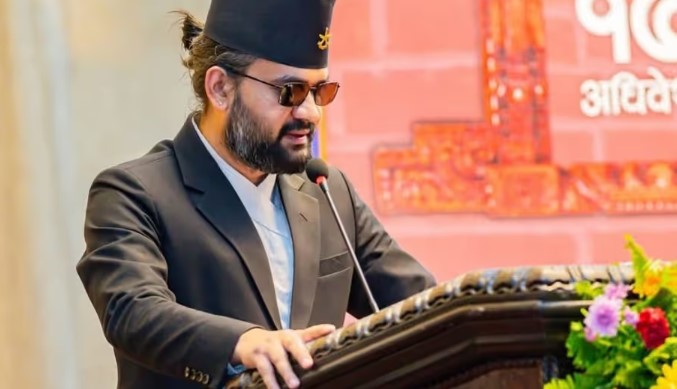
In a historic shift for the Himalayan nation, 35-year-old Balendra Shah, popularly known as “Balen,” was sworn in as the 47th Prime Minister of Nepal on Friday. The ceremony took place at the Presidential Office, Sheetal Niwas, where President Ram Chandra Paudel administered the oath of office and secrecy at the astrologically auspicious time of 12:34 p.m., coinciding with the festival of Ram Navami. Shah’s rise to the premiership follows a landslide victory for his Rastriya Swatantra Party (RSP) in the March 5 general elections, where the fledgling party secured 182 out of 275 seats in the House of Representatives. This “youth-led political earthquake” effectively dismantled the decades-long grip of legacy parties, signaling a definitive rejection of the traditional political establishment following a violent anti-corruption uprising in late 2025.
A structural engineer and former rap artist, Shah first disrupted the political status quo in 2022 when he won the Kathmandu mayoral race as an independent. His transition to national leadership marks several “firsts”: he is the youngest person to lead the country, the first Prime Minister from the Madhesi community of the southern plains, and the first to lead a majority government under Nepal’s current federal setup. Dressed in his trademark black attire and sunglasses, Shah pledged his loyalty to the constitution while thousands of supporters gathered outside, celebrating what many call the “Gen Z Revolution.” Beyond the symbolic victory, Shah faces an immediate and daunting agenda; his government is tasked with stabilizing a volatile economy, addressing systemic corruption, and navigating complex geopolitical relations with neighbors India and China. Indian Prime Minister Narendra Modi was among the first global leaders to congratulate Shah, expressing a commitment to deepening bilateral ties as Nepal enters this unprecedented political chapter.